Draw a digit. Three models read it as you write.
Trained on 60,000 handwritten digits from the MNIST dataset. The models run entirely in your browser, so nothing you draw leaves this page.
The CNN reads
Draw any digit from 0 to 9 on the page.
Probability for each digit
Loading the models…
How it works
-
You write a digit
Strokes are captured on a 560 × 560 canvas with mouse, touch or stylus.
-
It becomes an MNIST image
We crop to the ink, shrink the longest side to 20 pixels and centre it by its centre of mass inside a 28 × 28 grid, exactly how MNIST was built.
-
The network computes
784 pixel values flow through the trained layers. The CNN slides 96 small 3 × 3 filters over the image to find strokes, curves and loops.
-
Softmax gives probabilities
The last layer turns ten scores into ten probabilities that add up to 100%. The highest one is the answer.
Results on 10,000 unseen test images
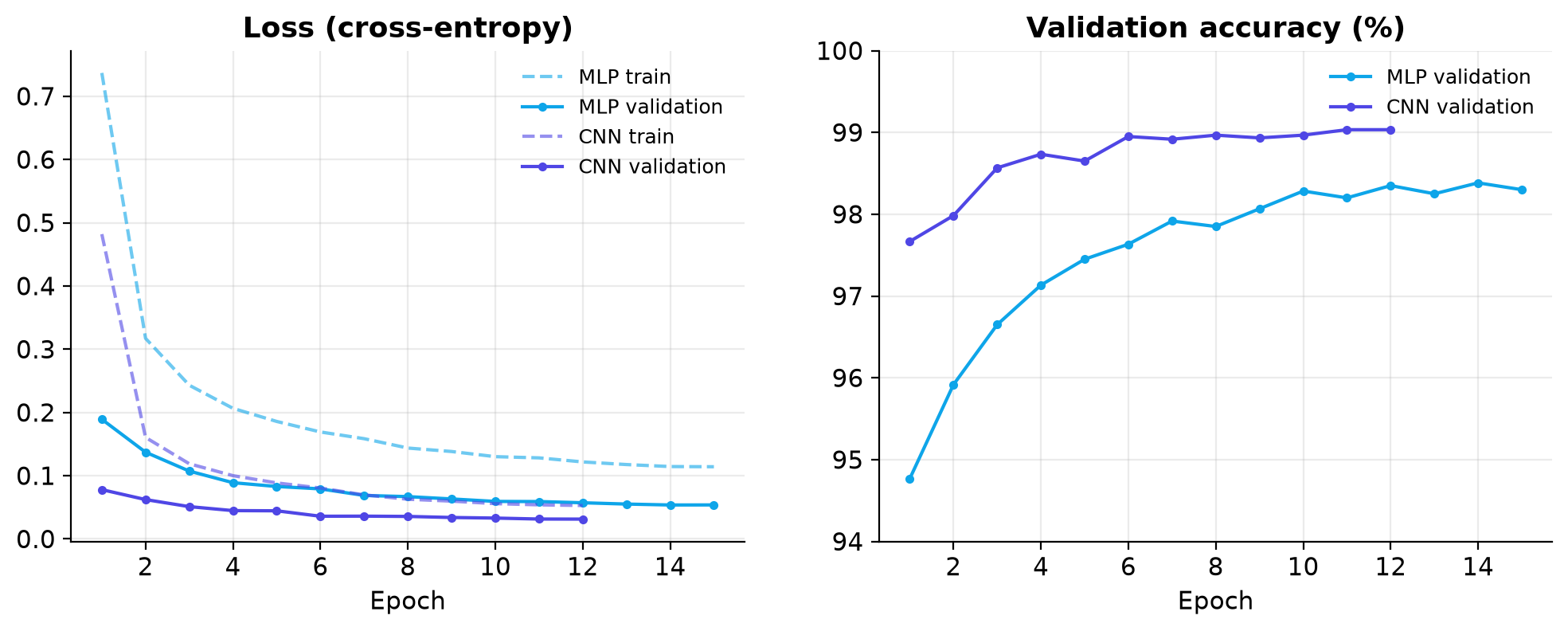
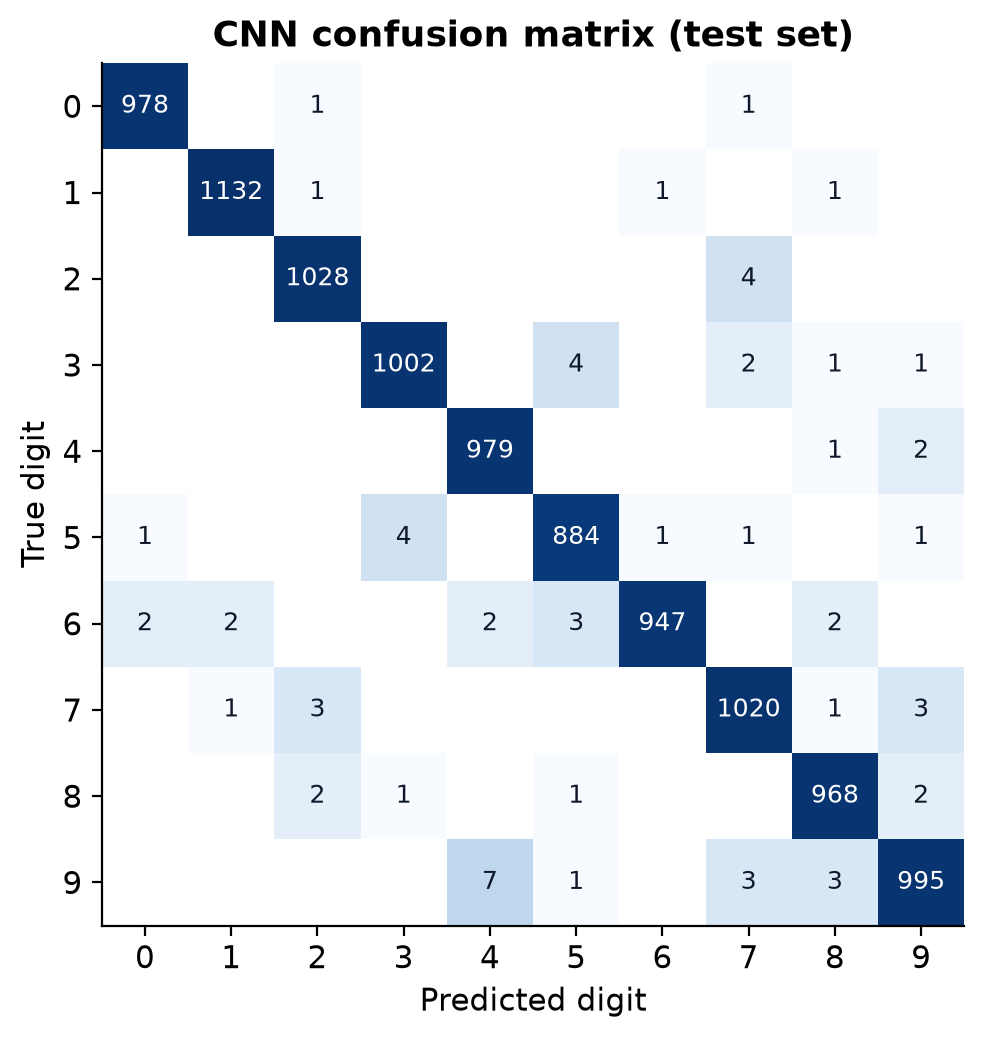
All three models were trained in Python on the same 54,000 images and judged on the official MNIST test set, which they never saw during training.
| Model | Architecture | Parameters | Accuracy | F1-score | Mistakes |
|---|